How to Choose the Right Capsules? A Complete Guide to Empty Capsule Hardcore Standards & Daily Tips
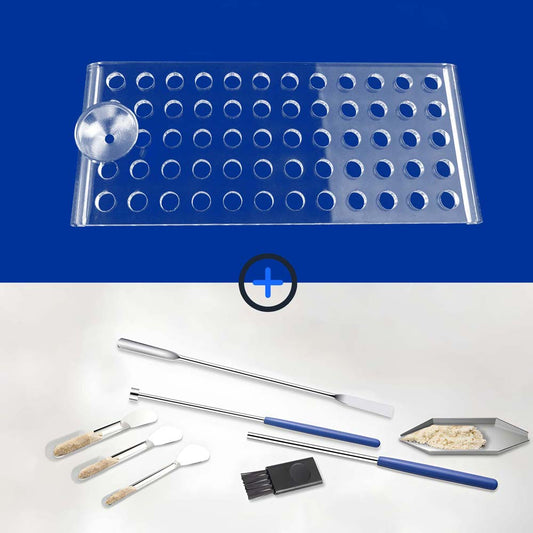
⭐ Learn how to select high-quality empty capsules — from raw materials and toughness to USP standards and capsule sizes (000# to 5#). Also covers home filling with a manual capsule filling tray .
📘 Article Summary: This guide explains everything you need to know about choosing empty capsules for supplements or herbs. It covers four hardcore quality standards (pure ingredients, strong toughness, reliable dissolution, and cGMP/USP compliance), daily selection tips, capsule size charts (from 000# to 5#), key reminders for taking capsules, differences between gelatin and plant-based capsules, and how to efficiently fill capsules at home using a manual capsule filling tray.

Many people only focus on what’s inside the capsule, but the shell itself is just as important. This article will explain once and for all how to choose the right capsules.
1. What Are Empty Capsules?
Simply put, empty capsules are edible shells used to hold powders or granules. They are safe, tasteless, and easy to swallow. They are widely used for pharmaceuticals, dietary supplements, herbal powders, probiotics, and more. Depending on the application, they can be pharmaceutical grade or food grade — both are safe to use.
2. Four Hardcore Standards for a Good Capsule
✅ 1. Pure Ingredients
Choose plant-based cellulose (HPMC) or edible gelatin. High‑quality capsules contain no artificial flavors or colors, with a natural, clear appearance. Plant capsules are suitable for vegetarians, while gelatin capsules come from collagen extracted from animal bones and skin. Both are safe and biodegradable.
✅ 2. Strong Toughness
A good capsule should not crack or break when squeezed. It should not jam during filling or leak powder, keeping the nutrients inside intact. Pinch it gently — a good capsule will bounce back and resist breaking.
✅ 3. Reliable Dissolution
Select gastric‑soluble or enteric‑soluble types based on your needs. Gastric capsules dissolve quickly in stomach acid, suitable for most powders. Enteric capsules protect the contents from stomach acid and release them in the intestine. Good capsules leave no residue and ensure smooth absorption.
✅ 4. Complete Certifications (US Standards)
Reliable capsules should be manufactured in a cGMP (Current Good Manufacturing Practice) facility and comply with USP (United States Pharmacopeia) or FDA standards. Heavy metals, microorganisms, residual solvents, and other indicators must be strictly controlled within USP limits. Look for USP Grade certification for peace of mind.

3. Three Daily Selection Tips
| Aspect | How to Check |
|---|---|
| Appearance | Smooth surface, no spots, no deformation, no bubbles |
| Smell | No odor, no fishy or chemical smell |
| Toughness | Does not break easily when gently squeezed; has some rebound |
4. How to Choose Capsule Size — The Smaller the Number, the Larger the Capsule
Capsule size determines fill volume. Common sizes from largest to smallest are:
000# > 00# > 0# > 1# > 2# > 3# > 4# > 5#
| Size | Approx. Fill Volume | Best For |
|---|---|---|
| 000# | Largest (~1.37 ml) | Extra‑large doses, e.g., high‑concentration herbal formulas |
| 00# | Very large (~0.95 ml) | Large doses of supplements or herbal powders |
| 0# | Large (~0.68 ml) | General supplements, everyday mainstream size |
| 1# | Medium (~0.50 ml) | Fine powders or smaller doses; easy to swallow |
| 2# | Small (~0.37 ml) | Children or micro‑dosing |
| 3# | Smaller (~0.30 ml) | Very small doses, fine formulations |
| 4# | Even smaller (~0.21 ml) | Ultra‑small doses, pets, or special uses |
| 5# | Smallest (~0.13 ml) | Micro‑doses, experiments, or mini capsules |
💡 Daily home use tip: For most people, size 0 or size 1 is recommended — they are moderate in size and easy to swallow. If you need a larger fill, choose size 00. For children or micro‑doses, consider sizes 2–4.
5. Two Important Reminders for Taking Capsules
❌ Do not take capsules with hot water
High temperatures can cause the capsule shell to melt prematurely, which may stick to the esophagus or irritate the stomach. Always use warm or cool water.
❌ Do not open capsules arbitrarily
Many people think the capsule shell is unnecessary and open it to take the powder directly. This can cause several problems:
Digestive irritation: The powder may directly irritate the esophagus and stomach lining, causing pain or damage.
Reduced efficacy: Enteric or sustained‑release capsules, if opened, release the drug too early, leading to reduced effectiveness or increased side effects.
Inaccurate dosage: Powder can spill or stick to the mouth and esophagus, resulting in an incorrect dose.
Only capsules containing plain powders (like herbal powders or supplements) may be opened if explicitly allowed. Never open pharmaceutical enteric or sustained‑release capsules.

6. Why Choose a Large Capsule Manufacturer?
- Stable supply – avoid stockouts
- Strict quality control – each batch traceable
- Full size range – 000#, 00#, 0#, 1#, 2#, and more
- Customization options – colors and printing available to meet brand needs
- If you are a pharmaceutical company, supplement brand, private label, or OEM buyer, finding a reliable empty capsule supplier will save you a lot of trouble.
7. Gelatin vs. Plant Capsules – How to Choose?
| Feature | Gelatin Capsules | Plant Capsules (HPMC) |
|---|---|---|
| Source | Animal bone/skin collagen | Plant cellulose |
| Suitable for | General population | Vegetarians, Halal consumers |
| Dissolution speed | Fast (gastric) | Stable, less affected by humidity/temperature |
| Stability | Sensitive to humidity | More resistant to drying |
| Cost | Lower | Slightly higher |
✨ Summary: Either type works for daily use. If you prefer a vegetarian option or need longer storage stability, plant capsules are the better choice.
8. Filling Capsules at Home – The Right Tool Makes It Easier
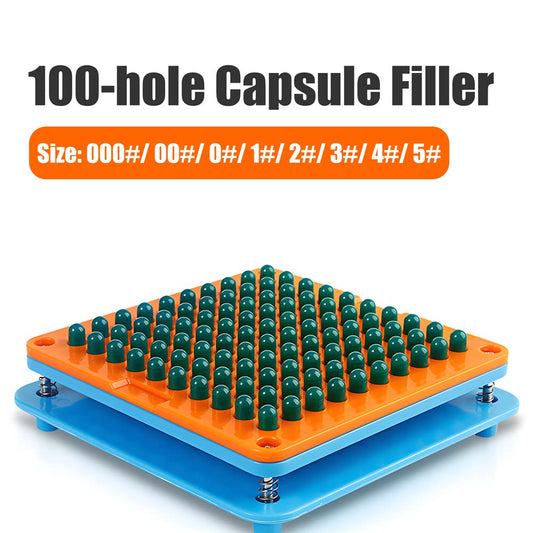
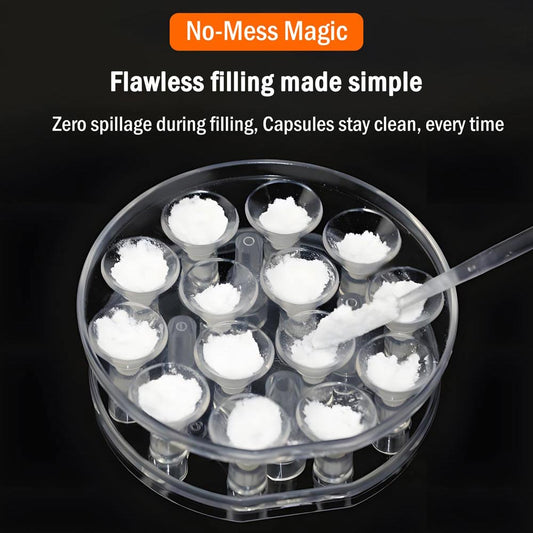
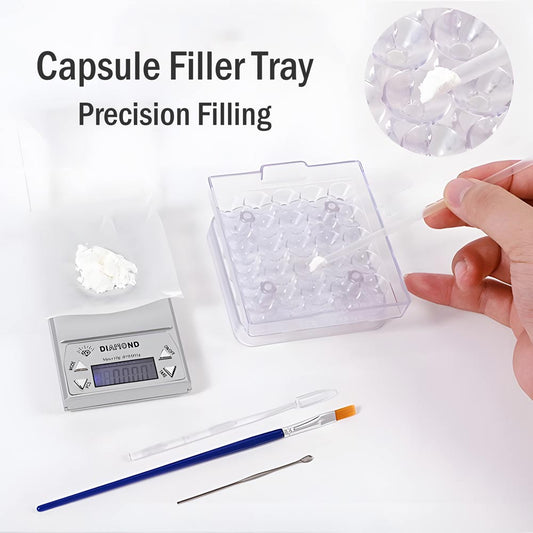
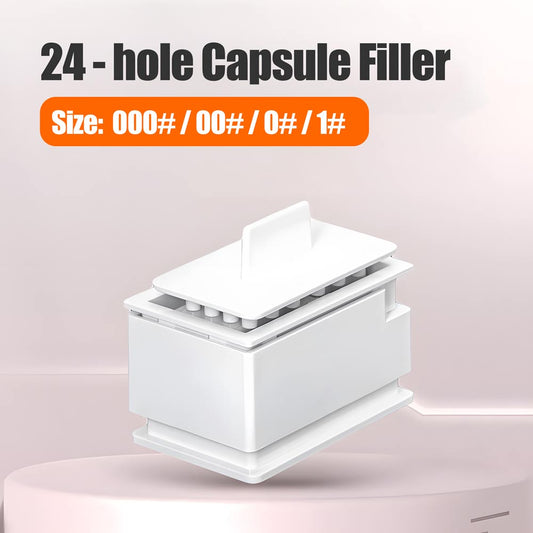
If you prefer to buy bulk powders (such as reishi mushroom powder, panax notoginseng powder, or probiotics) and fill them into capsules yourself, it is not only economical but also allows you to control the exact dosage. A manual capsule filling tray can greatly improve your efficiency.
Simple operation: Place empty capsule bodies into the tray holes, spread the powder, scrape it level, and cap — you can fill dozens of capsules in one go.
Uniform fill volume: The scraper design ensures each capsule receives a consistent amount of powder, avoiding waste from hand‑trembling.
Time‑saving: Filling 200 capsules manually takes only about ten minutes — more than 10 times faster than hand‑filling one by one.
Compatible with multiple sizes: Home‑use filling trays typically support common sizes like 0#, 1#, 00#, and some also support sizes 2# and 3#.
🌟 Pro tip: For home filling, plant capsules are recommended because they are anti‑static and do not attract powder, making the filling process smoother. Paired with a capsule filling tray, you can do it yourself — clean, safe, and cost‑effective.

Final Thoughts
A tiny capsule shell may seem insignificant, but it is the first guarantee of safe and effective supplementation. Choosing the right ingredients, size, and certifications ensures that the nutrients or medicine inside deliver their full value.
I hope this article helps you go from “just buying capsules” to “knowing how to choose capsules.” If you have more questions about capsule filling or selection, feel free to leave a comment.
💬 Do you usually use gelatin capsules or plant capsules?
© licuiwei.com — Independent quality capsule knowledge & home filling solutions