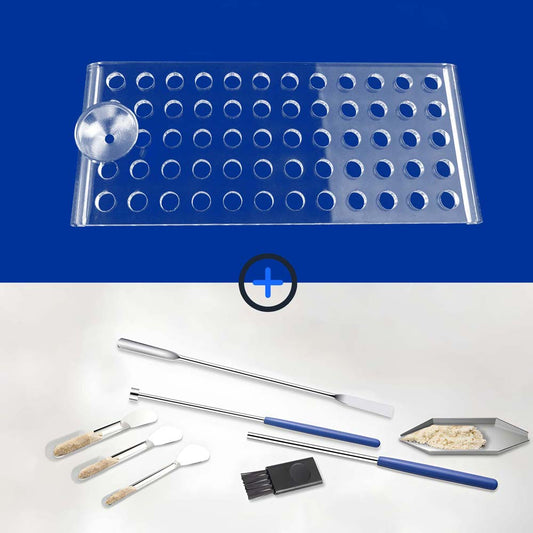
How to Fill Capsules at Home (Using a Manual Capsule Filling Tray)
Share
Filling capsules at home doesn’t require an electric machine.
For personal supplements, herbal blends, or small DIY batches, a manual capsule filling tray is one of the most practical tools available.
This guide explains how to fill capsules at home step by step, using the same method recommended for beginners who want accuracy without complexity.
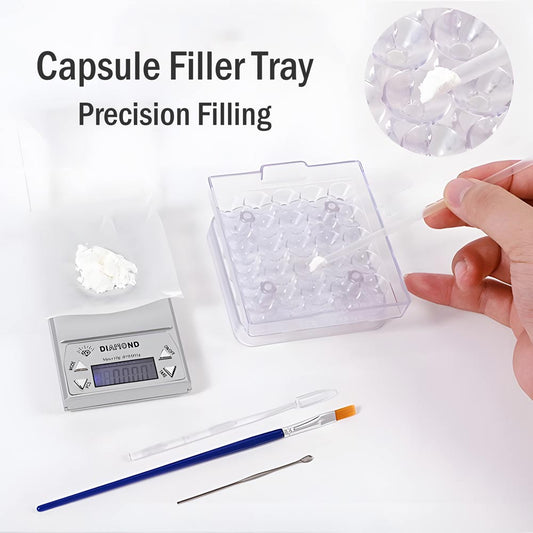
Tools You’ll Need to Fill Capsules at Home
Before you start, prepare the following:
- Empty capsules (commonly size 00 or 0)
- Powdered ingredients (herbs, vitamins, or supplements)
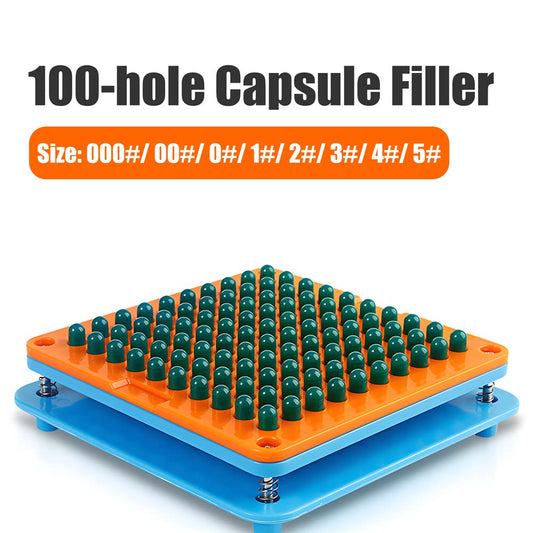
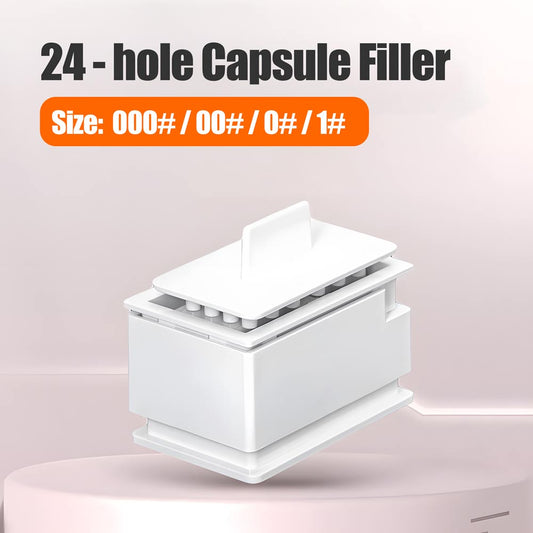
- A manual capsule filling tray
- A scraper or flat card
- Optional: tamping plate for compacting powder
If you’re new to capsule filling, using a tray designed specifically for capsule alignment makes the process cleaner and more consistent.
You can see an example of a manual capsule filling tray designed for beginners here:
👉 Capsule Filling Tray Product Page
Step-by-Step: How to Fill Capsules at Home Without a Machine
Step 1: Separate the Capsules
Gently pull apart the capsule caps and bodies.
Place the capsule bodies into the holes of the filling tray so they stay upright and evenly spaced.
Step 2: Spread the Powder Evenly
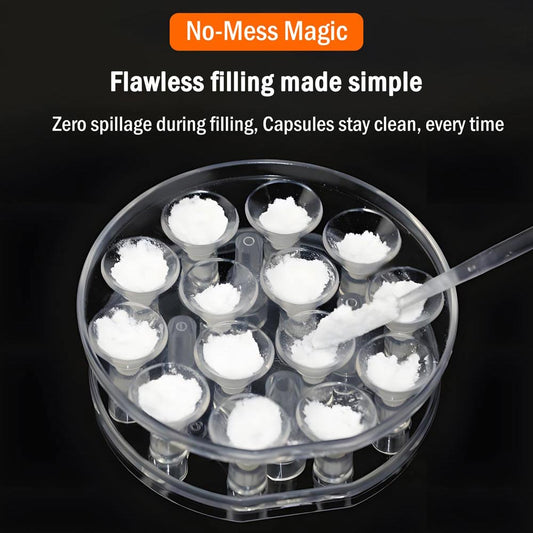
Pour powder across the tray surface.
Use a card or scraper to guide the powder into each capsule opening.
Take your time—manual filling gives you more control and reduces waste compared to freehand filling.
Step 3: Compact the Powder (Optional but Recommended)
If your tray includes a tamping plate:
- Press gently to compact the powder
- Add more powder if needed
- Repeat until capsules are evenly filled
This step improves consistency, especially when working with lighter powders.
Step 4: Close the Capsules
Place the capsule caps back on top.
Apply even pressure until the capsules lock together.
Most users find this easier with a tray than doing it one by one.
Step 5: Remove and Store Finished Capsules
Remove the filled capsules from the tray.
Store them in a clean, dry container away from moisture.
Is a Manual Capsule Filling Tray Accurate Enough?
For home use and small batches, yes.
A manual capsule filling tray provides reliable accuracy when:
- Powder texture is consistent
- Tamping pressure is even
- Capsule size matches the tray
If you’re comparing options, this guide explains the difference clearly:
👉 Capsule Filling Tray vs Capsule Machine
Manual Capsule Filling Tray vs Capsule Machine
| Feature | Manual Tray | Capsule Machine |
| Cost | Lower | Higher |
| Setup | Simple | More complex |
| Power Needed | None | Often required |
| Batch Size | Small to medium | Large-scale |
| Best Use | IY & beginners | Commercial production |
If you’re filling capsules occasionally or testing formulations, a manual tray is usually the more practical choice.
Common Mistakes Beginners Make
- Using clumpy or uneven powder
- Overfilling capsules
- Applying uneven pressure when closing
- Skipping tamping for low-density powders
These issues are easier to control when using a tray instead of filling capsules by hand.
Choosing the Right Capsule Size
Most beginners start with:
- Size 00 – higher capacity, commonly used for supplements
- Size 0 – easier to swallow, slightly less capacity
Make sure your filling tray matches the capsule size you plan to use.
If you’re unsure, this guide may help:
👉 How to Choose the Right Capsule Filling Tray
FAQ: Filling Capsules at Home
Do I need a capsule filling machine?
No. For personal use, a manual tray is sufficient and easier to manage.
How many capsules can I fill at once?
That depends on the tray design. Most manual trays handle between 16 and 100 capsules per batch.
Can I use a tray for herbal blends or vitamins?
Yes. Manual trays are commonly used for herbs, vitamins, and supplement powders.
(For liquids or oils, a different method is required.)
Final Thoughts
If you want to fill capsules at home without investing in a machine, a manual capsule filling tray offers a simple and reliable solution.
It’s easy to learn, affordable, and well-suited for beginners working with small batches.
Once your needs grow, you can always upgrade—but for most DIY users, a tray is the right place to start.